
MYCPE ONE Launches HIPAA-Aligned Virtual Assistant Services for Healthcare Business

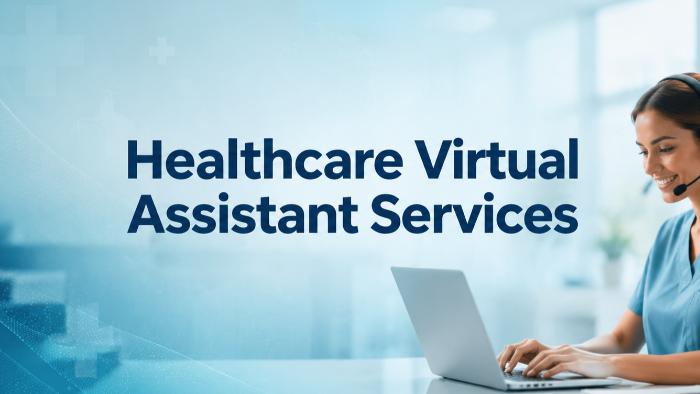
MYCPE ONE has launched a new Healthcare Virtual Assistant Services program built for U.S. healthcare practices managing rising administrative workloads. The program gives practices trained remote support for non-clinical functions — scheduling, patient communication, documentation, billing-related administration, and insurance verification — through a HIPAA-aligned approach, freeing internal teams to spend more time on patient-facing and higher-value work.
The Objective
Administrative demands on healthcare practices keep growing, and finding skilled support without expanding every function in-house has become an increasingly common operational strategy. MYCPE ONE's Healthcare Virtual Assistant Services were built for practices that want additional non-clinical support so internal staff can focus on patients and higher-value work, rather than administrative backlog.
The Challenge: Administrative Load Meets Regulatory Sensitivity
Administrative work is a real operational burden for healthcare practices. Scheduling, patient communication, documentation support, data entry, billing-related administration, and insurance verification are repetitive but essential — and they consume staff time that could go toward patient care.
Outsourcing that work isn't as simple as outsourcing it would be for most businesses, though. Healthcare practices have to evaluate how an external team handles sensitive information: system access, workflow discipline, and privacy and security controls all matter in a way they don't for a typical back-office task.
That's what makes choosing a Healthcare Virtual Assistant for business a different decision than hiring a general-purpose virtual assistant. A practice isn't just evaluating whether a task gets done — it's evaluating whether the support team understands the sensitivity of healthcare information and the operational requirements of working in a regulated environment.
The Solution: A HIPAA-Aligned Virtual Assistant Program
MYCPE ONE built its Healthcare Virtual Assistant Services around these requirements, giving practices access to trained virtual assistance for administrative and operational functions rather than a generic staffing pool.
Potential areas of support include:
• Administrative coordination
• Appointment-related assistance
• Data management
• Documentation support
• Billing and insurance-related administrative tasks
• Other routine processes, scoped to the practice's specific requirements
The program takes a HIPAA-aligned approach to handling healthcare-related information. Importantly, MYCPE ONE is clear that practices should still evaluate the specific safeguards, agreements, access controls, and responsibilities applicable to their own operations before assigning any work involving protected health information (PHI) — HIPAA alignment is a design principle for the program, not a substitute for a practice's own compliance review.
Choosing an Operating Model
Practices evaluating remote administrative support generally have a few paths:
• Build and manage an internal remote team — full control, but the practice owns recruiting, training, and oversight.
• Work with a managed service provider — outsourced staffing with less internal build-out required.
• Adopt a structured model with greater control over team development — a middle path that gives the practice more say in how the team is built and how the relationship evolves over time.
The right approach depends on the practice's workload, internal management capacity, security requirements, and growth objectives — there isn't a single correct model for every practice.
The Benefits
A healthcare-focused virtual assistant program can help practices increase administrative capacity without pushing every additional task onto on-site employees. Delegating appropriate routine work can improve workflow efficiency, reduce administrative pressure, and free internal resources for patient service and core practice operations.
The model also adds flexibility as a practice grows or its administrative workload fluctuates. Instead of treating staffing as a fixed cost, practices can evaluate virtual support against specific processes and current operational needs — scaling up or down as those needs change.
MYCPE ONE's launch reflects a broader shift toward specialized remote workforce models, where practices look for skilled support while still holding operational, privacy, and security considerations to a healthcare-appropriate standard.
What to Evaluate Before Choosing a Healthcare Virtual Assistant Partner
The most important question isn't whether a virtual assistant can complete a given task — it's whether the operating model, workforce, processes, and safeguards behind that assistant are appropriate for a healthcare environment. Before assigning work, practices should look at:
• The operating model — internal team, managed provider, or structured hybrid — and whether it matches the practice's management capacity.
• Safeguards and agreements that apply to the practice's own operations, including how PHI-related work is scoped and handled.
• Access controls — whether remote staff are given access appropriate to their specific role, rather than broad system access by default.
• Training and workflow discipline — how consistently the remote team follows the practice's own SOPs, not just general guidance.
• Growth fit — whether the model can scale as the practice's administrative needs change.
Common Mistakes Practices Make When Evaluating Remote Administrative Support
• Treating all virtual assistant options as interchangeable, regardless of the operating model behind them.
• Focusing only on whether a task gets done, rather than on how it gets done — the process matters as much as the outcome in a regulated environment.
• Not asking upfront about the safeguards, agreements, and access controls that would apply to their own operations.
• Assigning PHI-related work before completing an internal compliance review, instead of scoping non-PHI tasks first.
• Choosing a staffing model based on cost alone, without weighing workload, management capacity, and growth plans.
Conclusion
For U.S. healthcare practices weighing remote administrative support, the real question isn't just whether a virtual assistant can complete a task — it's whether the operating model, workforce, processes, and safeguards behind that support are appropriate for a healthcare environment. MYCPE ONE's HIPAA-aligned Healthcare Virtual Assistant Services are built around that distinction, giving practices trained administrative support without asking them to skip their own compliance evaluation.
Media Contact
Nemin Vora,
Content & Media Manager, MYCPE ONE
+1 646-827-4348
nemin.vora@my-cpe.com
https://www.my-cpe.com


Share This Article
What's Trending?
Trending topics & tools for the CPA community

Announcing Business Valuation: Fundamentals, Techniques, and Theory
Written by leading industry experts, this book is an authoritative and comprehensive how-to guide to valuing private business enterprises.
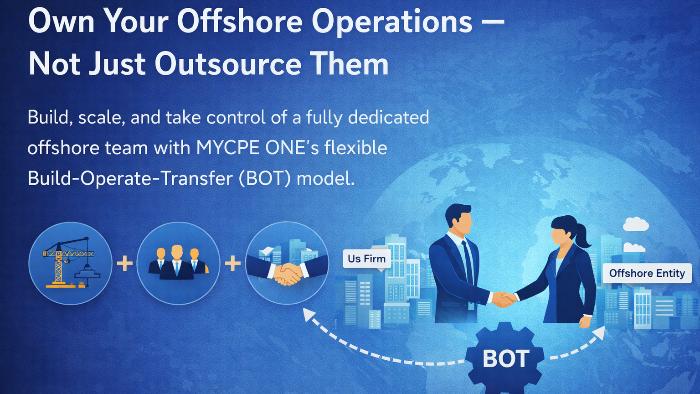
Own Your Offshore Operations — Not Just Outsource Them
Build, scale, and take control of a fully dedicated offshore team with MYCPE ONE’s flexible Build-Operate-Transfer (BOT) model.

How Firms are Rethinking Reasonable Comp (Quick Video)
It’s a short video and makes the value of repeatable, data-backed approach clear (especially compared to spreadsheets, gut checks and one-off calculations).
Resources
Valuable information provided by our sponsors.
Education & CPE: Realizing AI's Impact in Accounting Through Responsible Adoption
Becker surveyed hundreds of accounting professionals to see how they are using AI and how...
Provided By:

Effective, Hands-On Training That Fits Your Schedule and Your Budget
Save your seat in Becker’s new Open Enrollment Staff Level Training (SLT) and take part in expert-led tax...
Provided By:
CPAdirectory members have access to discounted auto and home insurance
At CPAdirectory, we think it's a good thing to provide our members with access to...
Provided By:

The accounting firms growing fastest all have this in common
Discover the billing and cash flow strategies helping firms get paid faster and grow smarter.
Provided By:
Stop Tool-Hopping: See what's new at Canopy (Plus $75)
Canopy has released massive updates to give you a truly all-in-one experience and consolidate your...
Provided By:

Free CPE-eligible Webinar: Lead Your Clients to a Successful Business
Free CPE for CPAs: Learn how to transform financial data into actionable guidance, deepen client...
Provided By: